| Oribi
Official Name:
Oribi (Ourebia ourebi)
Hunting Oribi Guidelines:
Hunting Techniques: Strategic approach to stalking in open grasslands, and accurate long-range shooting
Challenges: Alert and quick to flee, requiring stealth and patience
Professional Guidance: Essential for ethical & successful hunting;
- Expertise in Oribi behaviour and habitat
- Focus on ethical hunting practices for a respectful pursuit
|
 |
Appearance:
- Small, slender antelope with a smooth, glossy fawn to rufous coat
- Distinctive white underside and black-tipped tail
- Males have sharp, straight horns (up to 20 cm)
Social and Habitat Characteristics:
Social Structure: Known for agility and remarkable leaping ability, typically seen alone or in pairs with a shy and elusive nature.
Diet: Primarily grasses
Habitats: Open grasslands |
|
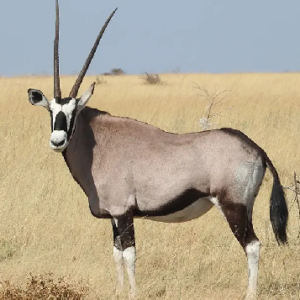
| Oryx / Gemsbuck
Official Name:
Oryx /Gemsbuck (Oryx gazella)
Hunting Oryx / Gemsbuck Guidelines:
Hunting Techniques: Hunting Gemsbuck is challenging due to their resilience and the open, arid terrain they inhabit
Challenges: Successful hunts require skill in long-range shooting and patient stalking.
Professional Guidance: Essential for ethical & successful hunting;
- The team’s expertise in Gembuck behaviour & knowledge of the terrain ensures an ethical & sustainable hunt, enhancing the experience & respecting both the animal & environment
|
|
Appearance:
- The Gemsbuck, Or Oryx, is a large antelope with a tan or sandy coat and bold black and white facial, leg, and flank markings.
- Both males and females have long, straight horns, often reaching up to 120 cm (7 inches) a defining feature of this species
Social and Habitat Characteristics:
Behaviour: These antelope are known for their endurance & defend themselves effectively against predators with their formidable horns
Diet: They are predominantly grazers
Habitats: Semi-Desert and Savannah regions. Can survive in arid areas of South Africa, relying on hardy grasses and leaves for sustenance |
|
| Ostrich
Official Name:
Ostrich (Struthio camelus)
Hunting Ostrich Guidelines:
Hunting Techniques: Long-Range shooting, tracking with vehicles, final approach on foot
Experience: Unique coloration & alert nature add to the hunt challenge
Challenges: Open plains or semi-desert terrain
Professional Guidance: Essential for ethical & successful hunting;
- Long-range shooting
- Tracking with vehicles, final approach on foot
|
|
Key Features:
- Remarkable speed
- Larest eyes of any land vertebrate, enhancing vision
- Largest eggs of any bid species
Social and Habitat Characteristics:
Behaviour: Travel long distances in search of food
Diet: Omnivores, primarily plant matter, also insects
Habitats: Open plains or semi-desert terrain |
|
| Red Lechwe
Official Name:
Red Lechwe (Kobus Leche)
Hunting Red Lechwe Guidelines:
Hunting Techniques: Presents a unique challenge due to the wetland habitat
Challenges: Requires adapted techniques for tracking and approaching in marshy conditions
Professional Guidance: Essential for ethical & successful hunting;
- Expertise in Red Lechwe behaviour and habitat
- Respectful approach with a focus on conservation & sustainability
|
|
Appearance:
- Medium-sized antelope with a reddish-brown coat, darker in males during breeding season
- Males have lyre-shaped, forward-curving horns up to 90 cm (35 inches) long. Features long, splayed hooves and water-repellent legs
Social and Habitat Characteristics:
Behaviour: Grazers known for their swimming ability. Form large herds near water bodies
Habitats: <span style="color: #ffffff;"Wetland area / marshy environments |
|
| Rhino
Official Name:
White Rhino (Ceratotherium simum) and Black Rhino (Diceros bicornis)
Conservation Activity:Vita Darting
Purpose: Non-lethal tracking and darting for conservation, medical examinations, DNA sampling, and medication administration
Impact: Contributes to rhino health and survival
Participant Involvement: Hands-on conservation efforts, and training on darting techniques and safety procedures provided
Experience: Educational insight into rhino behaviour, habitat, and conservation challenges |
|
Key Features:
- Massive bodies, large heads, and prominent horns
- Solitary animals
Social and Habitat Characteristics:
Diet: Mainly leafy plants and branches
Habitats: Varies from open savannahs to dense bush |
|
| Roan Antelope
Official Name:
Roan Antelope (Hippotragus equinus)
Hunting Roan Antelope Guidelines:
Challenges: Roan’s natural wariness and preference for open areas, requires strategic stalking and precise shooting
Professional Guidance: Essential for ethical & successful hunting;
- In-depth knowledge of Roan behaviour and habitat
- Focus on ethical hunting practices and respectful approach to wildlife and environment
|
|
Appearance:
- Light Brown to reddish-brown coat with a black & white facial mask
- Long, tasselled ears and ringed horns (up to 1 meter)
- Robust build, large African antelope
Social and Habitat Characteristics:
Behaviour: live sin small herds with one dominant male and strong territorial behaviour, especially during breeding season
Diet: Grazes mainly on grasses
Habitats: Open woodland and grassland |
|