| Golden Wildebeest
Official Name:
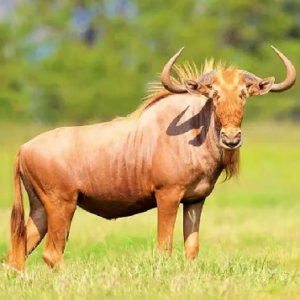
Golden Wildebeest (variant of the Blue Wildebeest, Connochaetes taurinus)
Hunting Golden Wildebeest Guidelines:
Rarity and Conservation: The Golden Wildebeest’s unique colour variation makes it significant in conservation efforts, with a focus on sustainable hunting practices to ensure the population remains stable
Challenges: Hunts often span serval days, adding to the anticipation and excitement
Professional Guidance: Essential for ethical & successful hunting;
- Expertise in tracking and understanding Wildebeest behaviour
|
 |
Appearance:
- Like the Blue Wildebeest, the Golden Wildebeest is highly social, moving in herds and demonstrating migratory behaviour as they seek fresh grazing lands Robust and strong, with the same distinctive curved horns as the Blue Wildebeest
Social and Habitat Characteristics:
Diet: Herbivorous, feeding mainly on grasses
Habitats: Grasslands and open Savannahs, adapted to diverse environments from arid zones to lusher grasslands near water |
|
| Greater Southern Kudu
Official Name:
Greater Southern Kudu (Tragelaphus strepsiceros)
Hunting Greater Southern Kudu Guidelines:
Hunting Techniques: Hunting Kudu is a rewarding challenge due to their elusive nature and skill at blending into surroundings.
Challenges: The hunt requires patience, precision, and keen stalking.
Professional Guidance: The team’s deep understanding of kudu behavior and habitat enhances the experience, ensuring ethical hunting practices that respect this magnificent animal. |
|
Appearance:
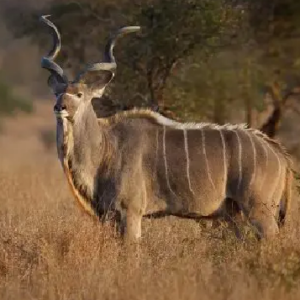
- The Greater Southern Kudu is a striking antelope with long, spiral horns reaching over 120 cm in males, and a grey-brown coat marked with white stripes for natural camouflage.
Social and Habitat Characteristics:
Behaviour: Known for their agility, they can jump high fences with ease. Kudus typically gather in small groups, while mature males may be solitary or form bachelor groups.
Diet & Habitats: These antelopes are primarily browsers, found in wooded and bushy areas. |
|
| Hippopotamus
Official Name:
Hippopotamus (Hippopotamus amphibius)
Hunting Hippopotamus Guidelines:
Hunting Techniques: Hunting hippos is particularly dangerous due to their size aggressive nature, especially in water. The hunt often involves tracking them to a water source and demands precision and respect for safety protocols
Ethical Hunting Approach: The team emphasizes a sustainable and respectful hunting experience, prioritizing the well-being of the hippo population and their habitats |
|
Appearance:
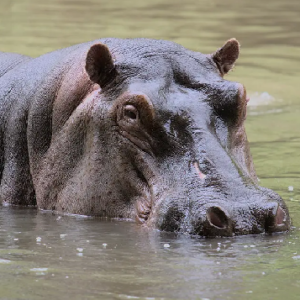
- Hippos are among the largest animals in Africa, with adults weighing up to 3200kg. They have a distinctive barrel-shaped torso, massive mouths with large teeth, nearly hairless skin, and short, sturdy legs
Social and Habitat Characteristics:
Behaviour: Semi-Aquatic Lifestyle: Hippos spend most of their day in water to stay cool, coming out primarily at night to graze on grasses
Territorial Nature: Highly territorial in water, male hippos often engage in aggressive displays and battles to establish dominance |
|
| Impala
Official Name:
Impala (Aepyceros melampus)
Hunting Impala Guidelines:
Hunting Techniques: Hunting Impalas is challenging due to their alertness and quick reactions. A successful hunt often involves both stalking and waiting, demanding patience and precision
Challenges: Impalas have acute senses and swift movement, making them an exciting challenge for hunters of all experience levels.
Ethical Guidance: The team emphasizes ethical and sustainable hunting practices, ensuring a respectful approach to the pursuits of Impala
|
|
Appearance:
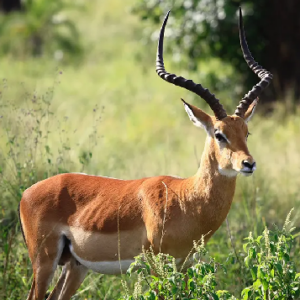
- The Impala is medium-sized standing about 90 cm (35 inches) at the shoulder. It is recognized for its sleek, reddish-tan coats with distinctive black markings, particularly on its tail and hindquarters.
Social and Habitat Characteristics:
Behaviour: These antelopes are social, often found in herds, especially during the mating season
Diet: Grazes on grasses and browse on leaves habitats: Impalas are highly adaptable, thriving in Savannah and light woodlands areas where they graze on grasses and browse on leaves |
|
| King Wildebeest
Official Name:
King Wildebeest (Connochaetes taurinus)
Hunting King Wildebeest Guidelines:
Hunting techniques: Taking place on open savannah, hunts require patience, skill and stamina over several days
Challenges: Stalking and tracking a King Wildebeest demands skill and strategic planning, particularly in the wide, open spaces
Population Concerns: Though not endangered, King Wildebeest are vulnerable to habitat loss and hunting pressures, making conservation essential for their population stability |
|
Appearance:
- Known for its blue-grey coat, muscular build and impressive forward-curving horns, the King Wildebeest weighs around 250-300 kg and exudes a regular presence
Social and Habitat Characteristics:
Social Structure:Known for forming large, social herds, & exhibit annual migratory patterns in search of fresh grazing lands
Diet: Predominantly grazers, feeding on grass and leaves
Habitats: Found in South African grasslands and open woodlands, where large herds migrate in search of grazing |
|
| Klipspringer
Official Name:
Klipspringer (Oreotragus oreotragus)
Hunting Klipspringer Guidelines:
Hunting Techniques: Hunting Klipspringer requires navigating steep uneven ground. Spot-and-stalk hunting techniques are essential in these challenging environments
Challenges: Demands patience, precision & experience
Professional Guidance: Essential for ethical & successful hunting;
- Huntshoek Safaris’ team is skilled at navigating the rugged landscapes where Klipspringers are found
|
|
Appearance:
- Small antelope, standing around 60 cm (6 inches) at the shoulder
- Stocky with a speckled grey or yellowish-brown coat, providing effective camouflage in rocky terrain
- Uniquely adapted hooves for a strong grip on steep, rocky surfaces
Social and Habitat Characteristics:
Behaviour: Often seen in pairs of small family groups, they are known for their monogamous mating habits
Diet: Plants and succulents
Habitats: Rocky, mountainous areas |
|