| Copper Blesbuck
Official Name:
Copper Blesbuck (Damaliscus pygargus phillipsi, colour variation)
Hunting Copper Blesbuck Guidelines:
Hunting Techniques: Careful stalking, precise shooting
Experience: Unique coloration & alert nature add to the hunt challenge
Challenges: Keen senses, preference for open spaces
Professional Guidance: Essential for ethical & successful hunting;
- Expertise in tracking
- Understanding Blesbuck behaviour
|
 |
Appearance:
- Rich, coppery-brown coat
- White underbelly and face
- Males have strong, ringed horns
Social and Habitat Characteristics:
Behaviour: Social, often found in herds, known for agility & endurance
Diet: Primarily grazers (various grasses)
Habitats: Open grasslands |
|
| Copper Springbuck
Official Name:
Copper Springbuck (Antidorcas marsupialis cuprea)
Hunting Copper Springbuck Guidelines:
Hunting Techniques: Requires patience, stealth & precision, long-range
Challenges: Agility and speed
Professional Guidance: Essential for ethical & successful hunting;
- Ethical hunting prioritizing safety and respect for the animal
- High success rate due to profound knowledge of behaviour and habitat
- Adherence to conservation principles
|
|
Appearance:
- Striking copper-red coat, white underbelly
- Dark brown stripes along flanks
- Pronounced lyre-shaped horns (up to 35 cm in males)
Social and Habitat Characteristics:
Behaviour: Diurnal (active during the day), social, often in herds, agile, known for “pronking” (Leaping up to 2 meters)
Diet: Primarily grasses, leaves, and shrubs
Habitats: Vast, open plains of South Africa |
|
| Eastern Cape Kudu
Official Name:
Eastern Cape Kudu (Tragelaphus strepsiceros)
Hunting Eastern Cape Kudu Guidelines:
Hunting Techniques: Hunting the Eastern Cape Kudu involves diverse landscapes, from dense bushveld to rugged mountains, making for a challenging and exciting experience.
Challenges: Typically spans serval days, offering ample time to appreciate the region’s natural beauty and wildlife
Professional Guidance: Essential for ethical & successful hunting;
- Expertise in tracking and understanding Kudu behaviour
|
|
Appearance:
- Notable for its long, spiral horns in males, which can reach up to 120 cm (47 inches) Males are larger, weighing between 190 kg – 270 kg with darker coats. Females are lighter and hornless
- Brownish grey with white vertical stripes, aiding in camouflage
Social and Habitat Characteristics:
Behaviour: Travel long distances in search of food
Diet: Mostly browse, feeding on leaves, shoots, & other vegetation
Habitats: Found in the dense bushveld & mountainous terrain |
|
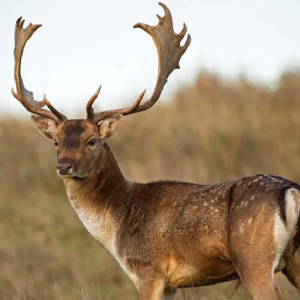
| Fallow Deer
Official Name:
Fallow Deer (Dama Dama)
Hunting Fallow Deer Guidelines:
Hunting Techniques: Fallow deer’s heightened sense demand careful stalking techniques and strategic use of cover to get within range
Challenges: Known for their keen eyesight and acute hearing, Fallow Deer are highly vigilant and quick to flee when sensing danger
Conservation: Dedicated to sustainable and ethical hunting, the team ensures a respectful approach that prioritizes conservation and fair chase |
|
Appearance:
- Medium-sized deer with varied coat colours, ranging from red to brown, black and white. They have a white rump patch and distinctive white spots along their back
- Only males (bucks) have antlers, which are palmate (broad and flat)
Social and Habitat Characteristics:
Behaviour: Generally social animals, Fallow Deer often form groups. Males tent to be more solitary outside the breeding season Habitats: Although originally native to Europe, Fallow Deer have adapted well to south Africa. They prefer mixed woodlands and open grasslands, making them versatile in various environments |
|
| Giraffe
Official Name:
Giraffe (Giraffa camelopardalis)
Hunting Giraffe Guidelines:
Hunting Techniques: Requires careful planning and understanding of giraffe behaviour, as well as skilled in long-range shooting
Challenges: Size & stature make them challenging to approach undetected
Regulation: Hunting is regulated to ensure sustainable population levels
Professional Guidance: Essential for ethical & successful hunting;
- Expertise in giraffe behaviour and habitat
- Adherence to ethical hunting standards and conservation practices
|
|
Appearance:
- Extraordinary height (up to 5.5 meters / 18 feet) & long neck
- Distinctive coat pattern with brown, irregular patches separated by lighter lines
- Variations in pattern and colouration across subspecies
Social and Habitat Characteristics:
Behaviour: Social animals in loose herds, with cautious & curious nature
Diet: Browses on a variety of plants, prefers acacia leaves.
Habitats: Savannah and woodland areas |
|
| Golden Oryx / Gemsbuck
Official Name:
Golden Oryx (Oryx gazella)
Hunting Golden Oryx / Gemsbuck Guidelines:
Hunting Techniques: : Hunting requires skilful stalking and long-range shooting due to the animal’s wariness and speed, combined with strategic planning to approach within range
Professional Guidance: Essential for ethical & successful hunting;
- Our team emphasizes conservation-focused, ethical hunting practices, respecting both the rarity of the Golden Oryx and the surrounding ecosystem
|
|
Appearance:
- Known for its unique golden-brown coat, the Golden Oryx retains the distinctive black and white facial markings characteristics of the species, along with long, straight horns that can reach up to 120 cm (47 inches) in both males and females
Social and Habitat Characteristics:
Behaviour: Known for its endurance, the Golden Oryx is well-equipped to defend itself from predators, embodying resilience and strength Typically found in herds, where individuals benefit from the collective vigilance of the group
Habitats: The Golden Oryx thrives in semi-desert & Savannah habitats |
|