| Sable Antelope
Official Name:
Sable Antelope (Hippotragus niger)
Hunting Sable Antelope Guidelines:
Hunting Techniques: Setting up near feeding or watering areas at night & use of dogs for tracking and baying
Challenges: Dense brush and woodland terrain, requires patience & skill in stalking, and hunts can span several days, demanding endurance
Professional Guidance: Essential for ethical & successful hunting;
- Expert knowledge of Sable Antelope behaviour and habitat
- Focus on safety, ethical hunting practices, and a high success rate
|
 |
Appearance:
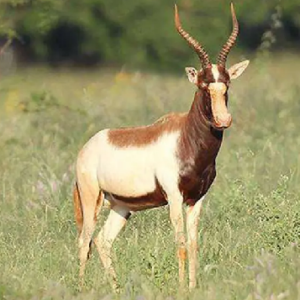
- Males have deep black coats, females and juveniles are brownish
- Striking white face markings and underbelly
- Robust build, up to 140 cm (55 inches) at the shoulder, weighing up to 235 kg
- Imposing horns, curving backward, up to 165 cm long (65 inches)
Social and Habitat Characteristics:
Behaviour: Herds led by a dominant bull, known for aggressive behaviour, especially when threatened
Diet: Grazes on grass and leaves, favouring fresh growth after rains
Habitats: Wooded savannah regions |
|
| Saddleback Blesbuck
Official Name:
Saddleback Blesbuck (Damaliscus pygargus phillipsi)
Hunting Saddleback Blesbuck Guidelines:
Hunting Techniques: Hunting this unique trophy requires strategic stalking and careful positioning due to the Blesbuck’s alert nature and open-terrain habitat.
Professional Guidance: The team’s knowledge of Blesbuck behaviour and effective hunting tactics ensures an ethical and successful hunting experience. |
|
Appearance:
- The Saddleback Blesbuck is a colour variant of the common Blesbuck, featuring a unique saddle-like marking on its back that contrasts with its reddish-brown coat.
- Males typically have thicker, more robust horns, but both sexes share similar appearances.
Social and Habitat Characteristics:
Behaviour: Form herds and are vigilant, quickly reacting to threats.
Diet: Grazers known for their stamina and speed.
Habitats: Found in open grasslands and plains. |
|
| Saddleback Impala
Official Name:
Saddleback Impala (Aepyceros melampus)
Hunting Saddleback Impala Guidelines:
Hunting Techniques: : Requires patience, skill, and a deep understanding of Impala behaviour due to their alert and agile nature
Challenges: The rarity of the colour variation adds to the challenge, as it shares the common Impala’s agility and speed
Professional Guidance: Essential for ethical & successful hunting;
- Our team offers expert knowledge and skilled tracking, ensuring a successful and ethical hunt of the rare variant
|
|
Appearance:
- A rare colour variation of the common Impala, with a distinctive dark, saddle-like marking across its back, contrasting with its reddish-tan coat. Males have lyre-shaped horns up to 90 cm (35 inches) long
Social and Habitat Characteristics:
Behaviour: Social animals often found in herds, known for their alertness and cautious nature
Diet: Grazes on grasses and browsing foliage
Habitats: Inhabits savannah and light woodland areas |
|
| Steenbok
Official Name:
Steenbok (Raphicerus campestris)
Hunting Steenbok Guidelines:
Challenges: Requires patience and stealth due to their alertness and keen senses, involves stalking and careful observation in flat to slightly undulating bushveld and hunts often span several days for a respectful and successful outcome
Professional Guidance: Essential for ethical & successful hunting;
- Expert knowledge of Steenbok behaviour and habitat
- Challenging yet ethical hunting experience in accessible terrain
|
|
Appearance:
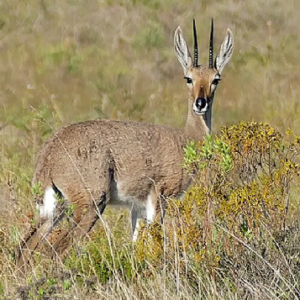
- Small, standing 45-60 cm at the shoulder, weighing 7-16 kg
- Reddish-brown coat, slender build Males have short, straight horns, females are hornless
Social and Habitat Characteristics:
Social Structure: Solitary or found in pairs, known for their skittish and elusive nature
Diet: Leaves, fruits, seeds, roots and occasional grazing
Habitats: Bushveld and savannahs with ample cover |
|
| Tsessebe
Official Name:
Tsessebe (Damaliscus Lunatus)
Hunting Tsessebe Guidelines:
Hunting Techniques: Takes place in vast, open savannahs, requires strategic planning due to the antelope’s speed and alertness
Challenges: Hunters must be physically and mentally prepared for stalking and accurate targeting
Professional Guidance: Essential for ethical & successful hunting;
- Huntshoek Safaris team offers extensive experience in tracking, understanding behaviour, and navigating terrain
|
|
Appearance:
- 120 to 140 cm (47 to 55 inches) at the shoulder, horns curved forward, thicker in males. Have a reddish-brown coat
Social and Habitat Characteristics:
Behaviour: Found in herds of up to 20 individuals. Complex social structure with dominant males and nursery herds.
Diet: Primarily grazers, feeding on grass, plays a role in controlling grass growth and seed dispersal
Habitats: Savannahs & grasslands with abundant green grass |
|
| Vaal Rhebuck
Official Name:
Vaal Rhebuck (Pelea capreolus)
Hunting Vaal Rhebuck Guidelines:
Hunting Techniques: Demands skill and endurance due to the challenging, steep terrain of their habitat
Challenges: Requires patience, precision, & the ability to navigate rough landscapes
Professional Guidance: Essential for ethical & successful hunting;
- Expertise in tracking and understanding the Vaal Rhebuck’s nature
|
|
Appearance:
- A slender, medium-sized antelope with a woolly, greyish-brown coat that provides camouflage in rocky, mountainous terrain
- Adult males have straight, sharp horns up to 25 cm (9 inches) long
Social and Habitat Characteristics:
Social Structure:Known for exceptional stamina & agility in difficult terrain. Usually found in small herds led by a dominant male.
Diet: Predominantly grazers, feeding on grass and leaves
Habitats: Typically found in rugged, high-altitude areas |
|