| Leopard
Official Name:
Leopard (Panthera pardus)
Hunting Leopard Guidelines:
Hunting Techniques: Nocturnal by nature, leopards are master hunters, relying on stealth and adaptability to capture prey in diverse habitat
Challenges: Their ability to move quietly and remain unseen makes them one of the most elusive big cats, admired for their elegance
Conservation & Symbolism:Representing both power and grace, the leopard remains one of the most iconic yet elusive members of the big cat family in the wild. |
 |
Appearance:
- Known for their striking rosette-patterned coat that offers excellent camouflage in various environments
- Strong, compact body with powerful limbs and a large skull, designed for agility and strength
Social and Habitat Characteristics:
Behaviour: Solitary creatures, each maintaining its own territory
Diet: Nocturnal by nature, leopards are master hunters, replying on stealth and adaptability to capture prey in diverse habitats |
|
| Lion
Official Name:
Lion (Panthera leo)
Hunting Lion Guidelines:
Challenges: Lions are dangerous game, requiring precision and calm under pressure, especially during a charge
Professional Guidance: Requires extensive knowledge of the lion’s behaviour, tracking skills and physical readiness
Ethic compliance: Emphasis is placed on sustainable practices
Conservation: Hunting can contribute to conservation efforts through regulated quotas and community involvement |
|
Appearance:
- Male lions are distinguished by their impressive manes, symbolizing power. They have a muscular build, deep chest and short, rounded head. Fur colour ranges from light buff to yellowish, reddish or dark ochre
Social and Habitat Characteristics:
Social Structure:Live in matriarchal groups called prides. Prides typically consist of females, their cubs, and a few male lions
Habitats: Grasslands, savannahs, dense scrub, and open woodlands |
|
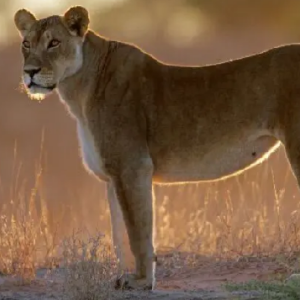
| Lioness
Official Name:
Lioness (Panthera leo)
Hunting Lioness Guidelines:
Hunting Techniques: Requires stamina, strength and agility. Long chases and endurance tests
Challenges: The lioness’s keen senses and teamwork make her a formidable hunter. The hunt requires careful planning and quick reactions
Conservation: Hunting can contribute to conservation efforts through regulated quotas and community involvement |
|
Appearance:
- Lacks a mane, has a muscular build & more agile than male lions
- Tawny coat blends into the grasslands aiding in stealthy hunting
Social and Habitat Characteristics:
Behaviour: Cooperative and matriarchal, with strong bonds among pride members
Habitats: Found in sub-Saharan Africa, preferring grasslands, savannahs and woodlands |
|
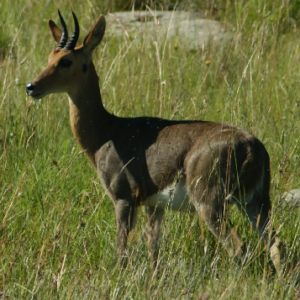
| Mountain Reedbuck
Official Name:
Mountain Reedbuck (Redunca fulvorufula)
Hunting Mountain Reedbuck Guidelines:
Hunting Techniques: Demands physical endurance and strategic planning on challenging terrain. Requires navigating steep, rocky highlands & being attentive to the antelope’s keen senses & elusive nature
Professional Guidance: Essential for ethical & successful hunting;
- Our team provides expert insights into the Mountain Reedbuck’s behaviour and habitat, ensuring a respectful, sustainable, and ethical hunting experience
|
|
Appearance:
- Medium-sized antelope with a greyish-brown coat and white underbelly
- Males have lyre-shaped horns up to 35 cm (13 inches) long
Social and Habitat Characteristics:
Behaviour: Grazers that feed on grasses. Typically found in small groups with a dominant male, females and juveniles. Known for agility and navigating rocky landscapes
Habitats: Inhabits mountainous terrain in South Africa, preferring areas with good cover and access to water |
|
| Nile Crocodile
Official Name:
Nile Crocodile (Crocodylus niloticus)
Hunting Nile Crocodile Guidelines:
Hunting Techniques: Requires careful planning, patience, and precision, tracking and shooting skills are essential
Challenges: Aquatic nature, motionless behaviour
Professional Guidance: Essential for ethical & successful hunting;
- Insights into crocodile behaviour and best times for hunting
- Safety measures required
|
|
Appearance:
- Large size (males up to 6 meters / 20 feet)
- Long, muscular tail and robust body
- Formidable jaw lined with sharp teeth
Social and Habitat Characteristics:
Behaviour: Apex predators, known for stealth and patience
Diet: Opportunistic hunters (fish, birds, large mammals)
Habitats: Rivers. Lakes, marshlands |
|
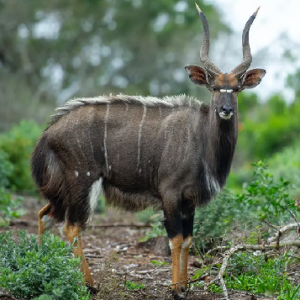
| Nyala
Official Name:
Nyala (Tragelaphus angasii)
Hunting Nyala Guidelines:
Hunting Techniques: Nyala hunting requires patience and stealth due to their preference for dense cover
Professional Guidance: The team’s tracking expertise is essential, helping hunters find and ethically pursue a Nyala while respecting the animal and its environment |
|
Appearance:
- Males: Dark brown or slate-grey coat with faint white stripes, a bushy tail with a white underside, & spiral horns up to 83 cm (32 inches) long
- Females: Reddish-brown coat with prominent white stripes, no horns
Social and Habitat Characteristics:
Behaviour: These antelopes are known for their elusive nature, often remaining hidden in thick vegetation
Diet: Primarily browsers, they feed on leaves, flowers, and fruits but can graze on grasses as well
Habitats: Nyala’s inhabit dense bushland and forested areas near water |
|